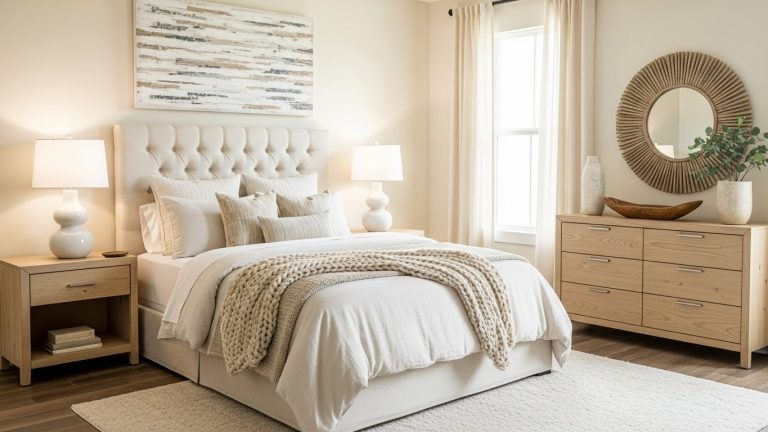
Bedroom Design with Window Behind Bed: Smart Ideas for a Stylish and Functional Space

Bedroom layouts can be tricky—especially when the window happens to be directly behind the bed. For many homeowners, this setup feels unconventional or even challenging. But in reality, a bedroom design with a window behind the bed can be both beautiful and practical when done thoughtfully. With the right approach, it can enhance natural light, balance symmetry, and create a cozy, magazine-worthy space.
In this guide, we’ll explore creative ways to decorate and design a bedroom with the bed placed in front of a window—without compromising comfort, functionality, or style.
1. Why Place a Bed in Front of a Window?

Traditionally, interior designers suggest placing the bed against a solid wall for visual stability. However, modern design embraces flexibility—and in many bedrooms, especially smaller ones or rooms with unique architecture, the best position for the bed might be right in front of a window.
Here’s why it can actually work:
- It maximizes floor space and keeps the room layout functional.
- It creates a stunning focal point with the bed framed by natural light.
- It allows better ventilation and a feeling of openness.
When styled correctly, this setup feels intentional and inviting, rather than awkward or accidental.
2. Consider the Window Style and Placement

Before moving the bed, assess the type and height of your window.
- Large picture windows: Perfect for a dramatic backdrop—add a low-profile headboard to avoid blocking the view.
- Small or high windows: Great for privacy; you can place almost any bed style underneath.
- Multiple windows or corner windows: Ideal for framing the bed symmetrically with drapes or shades.
If you’re dealing with floor-to-ceiling windows, consider floating the bed slightly away from the wall to protect curtains and maintain ventilation.
3. Use the Right Headboard Style

The headboard is key when designing a bedroom with a window behind the bed—it must complement both the architecture and the light flow.
Recommended headboard styles:
- Low-profile headboards: Keep natural light unobstructed while maintaining structure.
- Slatted or open-back headboards: Allow light to pass through for an airy feel.
- Upholstered headboards: Add softness and texture, making the window area feel cozy rather than stark.
- No headboard: Instead, use curtains or wall art to create visual interest and mimic a headboard effect.
Avoid tall or bulky headboards that completely block the window unless your goal is to create a bold, statement wall.
4. Dress the Window Thoughtfully

Window treatments can make or break this layout. You want to maintain light control and privacy while highlighting the design.
Smart window treatment ideas:
- Sheer curtains: Let light filter softly behind the bed for a romantic effect.
- Roman shades or roller blinds: Sleek and practical; they don’t compete with your bedding.
- Layered drapery: Combine blackout panels with sheers for flexibility.
- Ceiling-to-floor curtains: Frame the bed elegantly and create the illusion of taller ceilings.
Ensure the curtain rod extends beyond the window frame so you can pull curtains fully aside during the day.
5. Create a Focal Point Around the Bed

When the bed is in front of a window, the wall itself becomes a design focal point.
Use decorative elements to enhance this area:
- Hang drapes that match your bedding for cohesion.
- Add string lights or a statement chandelier for nighttime ambiance.
- Place symmetrical side tables and lamps to balance the composition.
- Use art or mirrors above the headboard to draw attention.
By styling the space around the window, you turn what could be a limitation into a powerful design feature.
6. Maximize Natural Light without Sacrificing Comfort

The advantage of this setup is abundant daylight—but it can also cause glare or overheating if unmanaged.
Here’s how to control it:
- Use light-filtering blinds for adjustable brightness.
- Add insulated curtains to regulate temperature.
- Choose soft, matte finishes for walls and décor to reduce reflection.
If mornings feel too bright, install blackout shades that you can lower at night and raise easily during the day.
7. Balance Symmetry and Proportion

Symmetry helps the eye make sense of unconventional layouts. If the bed isn’t perfectly centered beneath the window, use décor to restore balance.
Try these ideas:
- Add matching nightstands and lamps for even visual weight.
- Use twin wall sconces instead of table lamps to free surface space.
- Hang artwork or mirrors to even out asymmetry.
Symmetry brings calm and order—essential qualities in a relaxing bedroom.
8. Choose the Right Bedding and Colors

When your bed is backlit by a window, your bedding becomes a visual centerpiece. Choose colors and fabrics that complement the light flow.
Best color choices:
- Neutral tones like beige, ivory, and taupe create serenity.
- Soft pastels such as blush, sage, or dusty blue enhance natural brightness.
- Dark hues like navy or charcoal add contrast and depth if your walls are light.
Opt for layered bedding—quilts, throws, and cushions—to add richness and dimension. Natural fabrics like linen and cotton look especially beautiful in natural light.
9. Add Storage Without Blocking the Window

Storage can be a challenge in bedrooms with limited wall space, but creative solutions can help.
Consider:
- Low dressers or benches at the foot of the bed.
- Floating shelves beside the window instead of bulky cabinets.
- Under-bed storage drawers to keep clutter hidden.
- Bedside wall-mounted shelves for minimal visual intrusion.
This way, you maintain openness and access to natural light without sacrificing practicality.
10. Style Around Seasons and Mood

The light that filters through your window will change with the seasons, influencing how the space feels. Refresh your décor throughout the year to keep it vibrant.
- In spring and summer, use lighter fabrics, sheer drapes, and fresh florals.
- In autumn and winter, switch to heavier curtains, cozy blankets, and warmer tones.
A few seasonal tweaks can completely transform the room’s mood without requiring major renovations.
11. Incorporate Greenery and Nature

Plants complement the natural light beautifully and bring life to the space.
- Place a potted plant on the nightstand or window sill.
- Hang small trailing vines like pothos or ivy from curtain rods.
- Use dried arrangements for a vintage, low-maintenance touch.
Greenery softens the structured lines of the window-bed arrangement and enhances relaxation.
12. Create a Sense of Privacy

If your bedroom faces a street or neighboring property, privacy is essential. Instead of heavy drapes that darken the room, consider:
- Frosted window film for semi-privacy while maintaining light.
- Cafe-style curtains that cover only the lower half of the window.
- Layered sheers to diffuse light without exposing the room fully.
These options help you enjoy daylight while keeping your private space secure.
13. Make It Cozy and Inviting

Ultimately, the goal is to make your bedroom feel restful and personal. Add finishing touches like:
- Soft area rugs underfoot.
- Throw blankets at the bed’s edge.
- Candles, scent diffusers, or soft lighting for ambiance.
- Personal touches like photos, art, or travel souvenirs.
A few well-placed accessories can transform your bedroom from ordinary to exceptional.
Conclusion
Designing a bedroom with a window behind the bed isn’t a mistake—it’s an opportunity. With smart styling, balanced lighting, and creative layout solutions, this arrangement can be both visually stunning and comfortable. The key is to embrace the window as part of your design story rather than work against it. By choosing the right headboard, curtains, and symmetry, you can create a restful retreat filled with charm, personality, and natural light.