
Rearranging Bedroom Ideas: Smart Layout Tips to Transform Your Space

Rearranging your bedroom is one of the fastest, simplest, and most cost‑effective ways to refresh your space without buying new furniture. Whether your room feels cramped, unbalanced, or just uninspiring, the right layout can completely change how the space looks and functions. From smarter bed placement to decluttering strategies, lighting improvements, and zoning techniques, this guide breaks down the most effective rearranging bedroom ideas that deliver a noticeable transformation.
Below is a full, easy‑to‑apply workflow to help you rethink your room like a designer.
Why Rearranging Your Bedroom Matters

Your bedroom is where you rest, think, recharge, and reset. A poorly arranged room drains energy—physically and visually. When you adjust the layout, you:
- Improve traffic flow
- Increase usable floor space
- Make the room feel bigger and cleaner
- Improve sleep quality
- Create zones for work, relaxation, or dressing
Good rearranging isn’t about pushing furniture randomly. It’s about intentional placement that supports movement, balance, and comfort.
Step 1: Start with a Clear Vision

Before shifting anything, decide what you want from the bedroom:
- More open floor space?
- Better lighting?
- A cozy or minimalist look?
- A dedicated workspace?
- A more peaceful sleeping setup?
Having clarity saves time and avoids chaotic rearranging.
Step 2: De-clutter Before You Rearrange
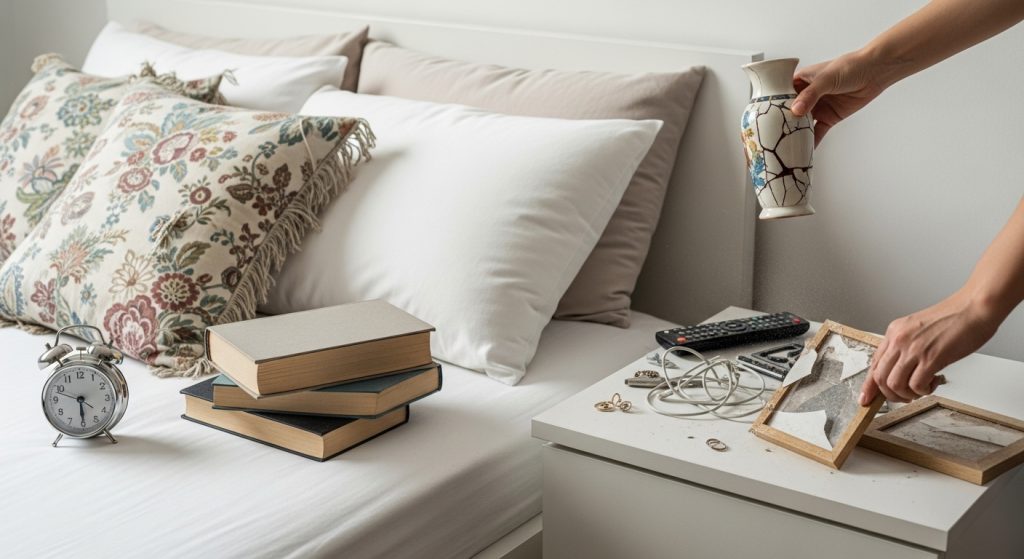
Nothing kills a layout faster than clutter. Remove everything you don’t use:
- Old decor
- Excess pillows
- Broken or unused accessories
- Random items piled on nightstands
Decluttering reveals the actual potential of the room.
Step 3: Prioritize the Bed Placement

The bed is the anchor—its position defines the entire layout. Use these principles:
Place the Bed Against the Longest Wall
This makes the room feel balanced and grounded.
Avoid Blocking Windows
Natural light improves mood and room perception.
Keep Walkways Clear
Leave enough space around the bed so the room doesn’t feel tight.
Use the “Command Position”
Ideally, place the bed where you can see the door without being directly in line with it. This creates psychological comfort and openness.
Step 4: Create Functional Zones
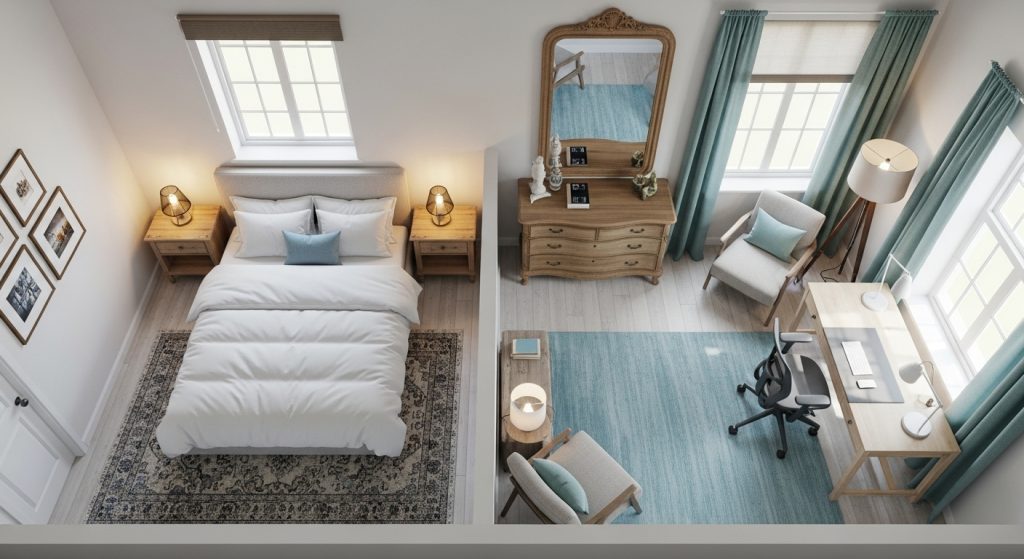
A well‑arranged bedroom often has zones:
- Sleeping zone: bed + nightstands
- Dressing zone: dresser + mirror
- Work/study zone: desk + chair
- Relaxation area: small chair or reading corner
Zoning stops the room from feeling messy or confusing.
Step 5: Optimize Furniture Placement

Here are practical guidelines for rearranging key pieces:
Nightstands
- Keep one on each side of the bed if possible.
- Make sure they’re height‑matched to the mattress.
- Avoid overcrowding with decor.
Dressers
- Place the dresser on a wall that doesn’t interrupt walking flow.
- Don’t put tall dressers directly opposite the bed—they visually shrink the room.
Desk
If you work or study in your bedroom:
- Avoid facing the bed (it hurts productivity).
- Place the desk near a window for natural light.
- Keep the back of your chair away from walkways.
Wardrobe
- Sliding-door wardrobes save space.
- If it has mirrors, place it where reflections add depth.
Step 6: Use Symmetry for a Clean Look

Symmetry creates calm and balance. Examples:
- Matching lamps on both sides of the bed
- Centering artwork above the bed
- Balanced nightstand decor
Even if your room isn’t large, symmetry makes it feel intentional.
Step 7: Use Light to Enhance the Rearrangement

Good lighting multiplies the impact of rearranging.
Overhead Light
Use warm white bulbs to soften the room.
Bedside Lamps
They add symmetry, warmth, and depth.
LED Strip Lights
Use behind:
- Headboards
- Mirrors
- Shelves
Natural Light Management
Rearranging curtains or replacing them with lighter options can instantly boost brightness.
Step 8: Choose Smart Storage Solutions

If your room feels full, storage strategy is the issue.
Under-Bed Storage
Use bins, drawers, or vacuum bags.
Vertical Shelving
Floor-to-ceiling shelves make small rooms feel taller.
Multi‑Purpose Furniture
- Storage benches
- Bedside tables with drawers
- Ottomans
Hooks and Wall‑Mounted Solutions
These free up floor space and keep the room organized.
Step 9: Rethink Decor Placement
Decor should support—not overpower—the layout.
Wall Art
Place large pieces behind the bed, not randomly around the room.
Rugs
Position rugs under the lower two‑thirds of the bed. This grounds the layout and makes the space feel unified.
Plants
Place plants near sunlight sources or corners that need life.
Mirrors
- Reflect natural light
- Make small bedrooms feel bigger
Just avoid placing mirrors directly opposite the bed unless necessary.
Step 10: Simplify the Color Flow
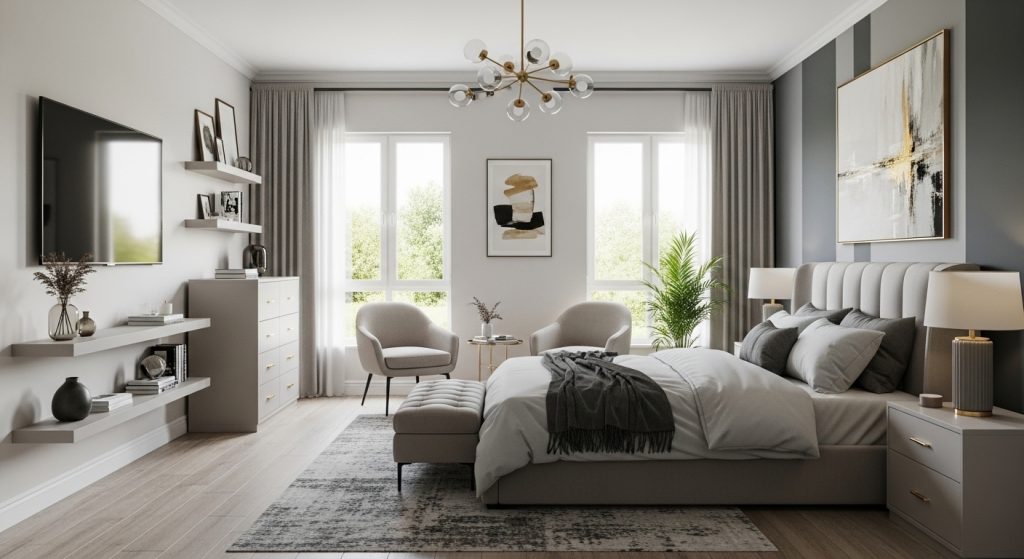
Color affects spatial perception.
Use Light Walls
Light shades enlarge the room visually.
Keep Large Furniture Neutral
It makes rearranging easier in the future.
Add Accent Pieces Instead of Overloading
Use pillows, blankets, or one statement wall.
Small Bedroom Rearranging Ideas
Small bedrooms require smarter strategy.
Push the Bed into a Corner
Creates more open space.
Use Floating Shelves
They replace bulky nightstands or dressers.
Opt for a Tall Dresser Instead of a Wide One
Vertical saves room.
Choose Minimal Decor
Visual clutter shrinks the room.
Mount the TV on the Wall
Avoid TV stands.
Large Bedroom Rearranging Ideas
In bigger rooms, the challenge is avoiding emptiness.
Pull the Bed Off the Wall
Center it away from the wall to create hotel‑style spacing.
Add a Seating Area
Use two chairs or a small sofa.
Add a Large Rug
Defines zones and prevents the room from feeling hollow.
Use Bold Decor Pieces
Large art, tall plants, or oversized mirrors help fill the volume.
Popular Rearranging Layout Examples

Here are layouts you can replicate:
Minimalist Layout
- Bed centered on main wall
- Two matching nightstands
- Single dresser opposite the bed
- Light decor, no visual noise
Cozy Layout
- Bed near the window
- Soft lighting layers
- Corner reading chair
- Thick rug + warm colors
Studio-Style Layout
- Bed against longest wall
- Desk near window
- Open area in center to keep the room breathable
Balanced Layout
- All large pieces aligned with wall length
- Mirrors used for balance
- Small decor kept purposeful
Common Mistakes to Avoid

Avoid these layout killers:
- Shoving all furniture against walls
- Blocking windows with the bed
- Over-stuffing with decor
- Ignoring walkways
- Using oversized furniture in small rooms
Fixing these instantly improves any space.
Final Thoughts
Rearranging your bedroom is a powerful way to refresh your environment without spending money. With smart bed placement, functional zoning, better lighting, and cleaner furniture arrangement, you can transform the entire feel of the space.
Even small adjustments—like moving the dresser, shifting the bed, or reorganizing decor—create massive visual impact. The key is intentional placement, not random movement.
Use these rearranging bedroom ideas as a framework, and you’ll end up with a room that feels bigger, cleaner, more functional, and far more comfortable.
