
27 Clever Small Bedroom Ideas That Make the Most Out of Your Space
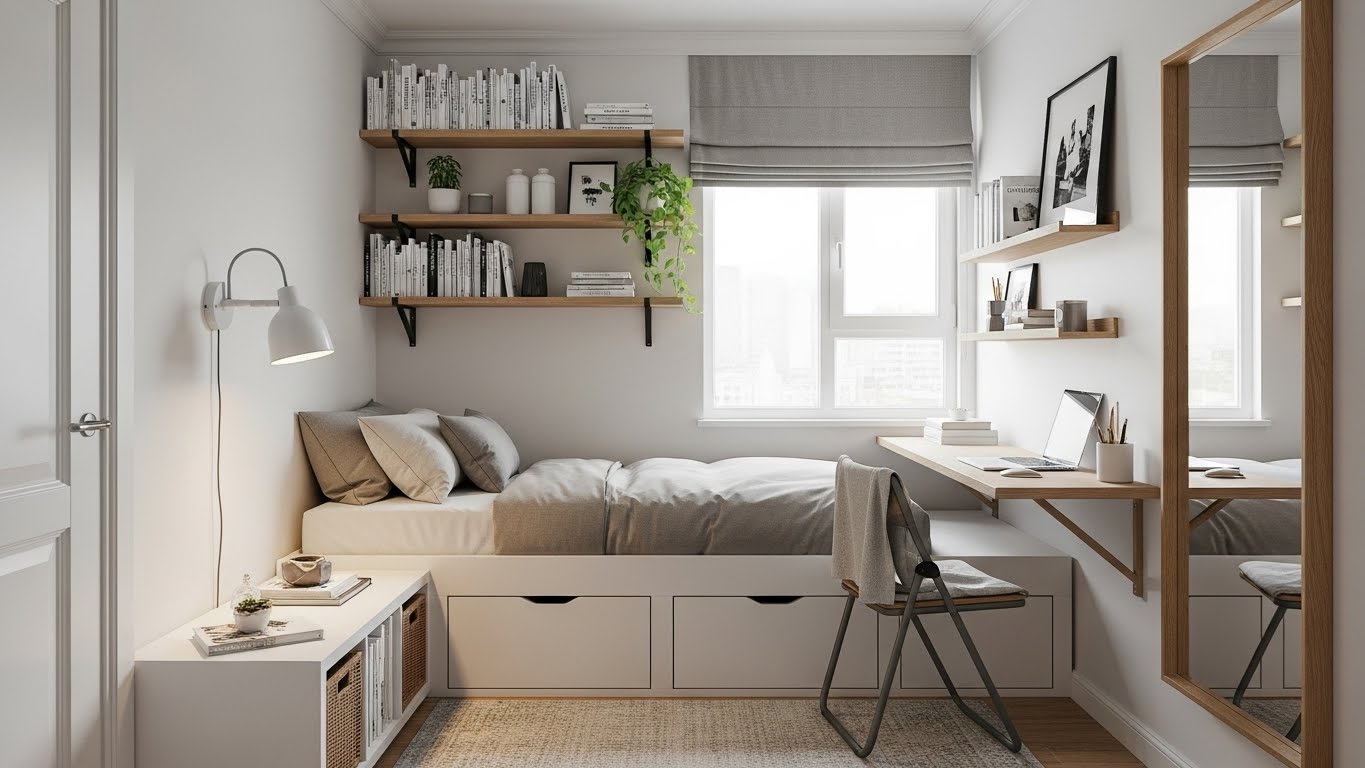

Small bedrooms don’t have to feel cramped or cluttered. With a few smart design decisions, even the tiniest room can feel stylish, comfortable, and surprisingly spacious. The key is to make every inch work hard—visually and functionally.
Here are 27 clever small bedroom ideas, including ways to Consider a Murphy Bed, Embrace Drapery, Install High Shelves, and more, to help you get the most out of your space.
1. Consider a Murphy Bed

A Murphy bed (wall bed) is one of the most effective ways to reclaim floor space. During the day, it folds up against the wall, turning your bedroom into an office, workout room, or reading nook. Choose a design that incorporates shelves or a desk on the front to double up on function.
2. Opt for a Daybed

Daybeds are perfect for small bedrooms, guest rooms, or studio apartments. Against a wall, they read as a sofa during the day and convert to a full sleeping spot at night. Add bolsters and layered pillows to make it look intentional and inviting, not just like a bed pushed into a corner.
3. Choose a Low Bed Frame

A low bed frame visually opens up the room by increasing the space between the bed and the ceiling. This makes the walls feel taller and the room feel airier. Pair it with slim-profile nightstands and avoid bulky headboards to keep the look light.
4. Try a Bare Canopy Bed Frame

Canopy beds aren’t just for big rooms. A bare canopy bed frame—with slender metal or wood supports and no heavy drapes—creates vertical interest and a sense of architecture without overwhelming the space. Keep linens simple so the frame feels sculptural, not bulky.
5. Build Into the Wall

Whenever possible, build into the wall rather than adding furniture that sticks out into the room. Recessed shelves, shallow built-in wardrobes, or a niche for the headboard free up precious floor area. Even a small alcove built into the wall can replace a nightstand.
6. Work With Awkward Alcoves

Instead of fighting odd corners or awkward alcoves, lean into them. Turn a tiny nook into a mini office with a floating desk, create a reading spot with a built-in bench, or fit a wardrobe into that strange recess. Custom or semi-custom solutions often pay off in tight spaces.
7. Install High Shelves

Install high shelves around the perimeter of the room, above door frames, or above the bed to store books, boxes, or seasonal items. This uses vertical space that usually goes to waste and keeps clutter off the floor and surfaces. Just keep what you need most often at arm’s height.
8. Add Wall Sconces

Skip bulky bedside lamps and add wall sconces or plug-in sconces above the nightstand or headboard. This frees up surface space and creates a clean, hotel-like look. Adjustable sconces are especially useful for reading in bed without lighting up the entire room.
9. Use Miniature Art

In a small space, oversized gallery walls can feel chaotic. Instead, use miniature art—small framed pieces, tiny canvases, or even a row of postcard-sized prints. Grouped thoughtfully, they add personality and focus without visually shrinking the room.
10. Extend Your Headboard

An extended headboard that runs beyond the edges of the bed can make the room feel wider and more cohesive. Upholstered or paneled headboards that span wall-to-wall can double as a built-in backdrop, visually “grounding” the bed and allowing you to use small, floating nightstands.
11. Embrace Drapery

Rather than skipping curtains to “save space,” embrace drapery strategically. Hang curtains high and wide—well above the window and slightly beyond its sides—to make the window and wall feel larger. Light, airy fabrics soften the room and add height without taking up much space.
12. Repurpose a Closet

If you’re short on square footage, it can make sense to repurpose a closet for something more valuable than hanging space. Turn a closet into a compact office, a vanity, or a cozy sleeping nook with a built-in bed. Replace the door with curtains or leave it open to add depth.
13. Drench It in Pattern

Contrary to popular belief, small bedrooms can handle bold design. Drench it in pattern with wallpaper, patterned textiles, or a matching fabric-and-wallcovering combo. When walls, curtains, and bedding share similar tones or motifs, the boundaries blur and the room can actually feel larger.
14. Try a Dark Color Palette

A dark color palette can make a small bedroom feel cocoon-like and luxurious. Deep navy, charcoal, forest green, or chocolate brown on the walls can push them visually backward, creating depth. Balance darker walls with lighter bedding, mirrors, and metallic accents so the room doesn’t feel heavy.
15. Add Wood Paneling
Add wood paneling or vertical shiplap to draw the eye upward and add warmth. Narrow vertical boards make ceilings feel higher, while horizontal boards can stretch a short wall visually. Paint the paneling in a soft neutral or stain it to show the grain for a cozy, cabin-like vibe.
16. Use Underbed Storage

Make the most of the largest footprint in the room: your bed. Choose a frame with built-in drawers, or use rolling bins or baskets underneath. Store off-season clothes, spare linens, or rarely used items here, and keep them neatly corralled so dust doesn’t accumulate.
17. Swap Nightstands for Shelves

Instead of traditional nightstands, mount small floating shelves or ledges on the wall. They take up less visual and physical space but still give you a place for a book, a glass of water, or your phone. Pair them with wall sconces for an uncluttered look.
18. Choose Sliding Doors

If your layout allows, swap swing doors for sliding or pocket doors. Hinged doors require clearance to open, which can make furniture placement tricky. Sliding closet or entry doors free up that arc of floor space and give you more flexibility with where the bed and storage can go.
19. Go Big With a Single Statement Piece

In a small bedroom, multiple small decorative items can feel fussy. Instead, choose one statement piece—a bold headboard, large artwork, or oversized pendant light. A single focal point draws attention away from the room’s size and makes it feel designed, not cramped.
20. Mirror, Mirror on the Wall
Mirrors bounce light and visually expand a room. A full-length mirror leaning against the wall, mirrored closet doors, or a large mirror above the bed or dresser can double the sense of space. Place it opposite a window if possible to maximize natural light.
21. Zone the Room With Rugs
If your bedroom has to serve multiple functions (like sleep + office), use rugs to define zones. A rug under the bed anchors the sleeping area, while a smaller one under a desk or reading chair marks that spot. This visual organization makes a small space feel intentional and orderly.
22. Use Multi-Functional Furniture

Look for pieces that do double duty: a storage ottoman as seating and linen storage, a desk that works as a vanity, or a trunk at the foot of the bed to hold blankets and off-season items. Multi-functional furniture reduces the number of pieces you need overall.
23. Keep the Floor as Clear as Possible

A visible, open floor makes any room feel larger. Use wall-mounted lighting, floating shelves, and raised-leg furniture to keep more of the flooring in view. Even being able to see under the bed or dresser adds a sense of airiness.
24. Curate a Tight Color Palette

Limit your color palette to two or three main hues plus a couple of accent colors. When walls, bedding, and furniture share related tones, the eye travels across the room more smoothly, making it feel more spacious and calm rather than choppy and cluttered.
25. Make the Bed Your Focal Point

In a small bedroom, the bed is usually the largest object—so let it shine. Use a beautiful headboard, layered pillows, and coordinated linens to make it the star. When the bed looks intentional and inviting, the entire room feels more polished, no matter its size.
26. Think Vertically With Hooks and Peg Rails

Use vertical wall space for storage by adding hooks, peg rails, or a slim coat rack. Hang bags, robes, jewelry organizers, or even a small hanging shelf. This keeps frequently used items accessible without taking up floor or furniture surface space.
27. Edit Ruthlessly and Hide the Clutter

Ultimately, the smartest small-bedroom trick is owning less and hiding what you keep. Regularly edit clothes, decor, and accessories. Use baskets, lidded boxes, and drawers to keep surfaces clear. A tidy room automatically feels larger, calmer, and more luxurious.
A small bedroom can absolutely feel like a retreat with the right mix of smart storage, visual tricks, and thoughtful design choices. Start with one or two of these ideas—whether it’s installing wall sconces, trying a dark color palette, or adding wood paneling—and build from there until your small space feels perfectly tailored to you.